


 +1 (850) 328-5905
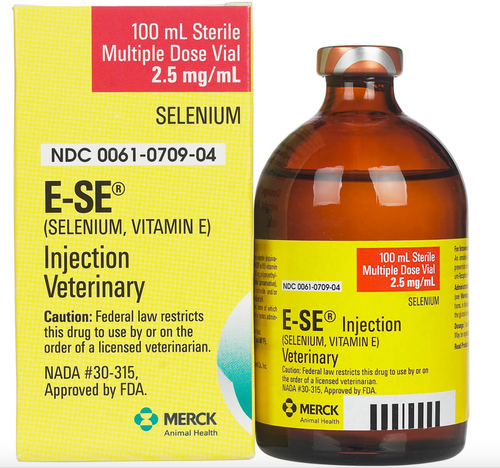
E-SE for horses is a widely used injectable veterinary treatment designed to address selenium and vitamin E deficiency in equine patients. Deficiencies in these essential nutrients can lead to serious muscular and metabolic problems, making E-SE an important tool in preventive and therapeutic horse care.
This article explains what E-SE is, how it works, when it is used, and what safety considerations horse owners should be aware of.
What Is E-SE for Horses?
E-SE is a prescription-only injectable medication formulated specifically for horses. It contains a precise combination of:
- Selenium (as sodium selenite)
- Vitamin E (as d-alpha tocopheryl acetate)
Both nutrients play a critical role in protecting muscle cells from oxidative damage and supporting normal metabolic function. E-SE for horses is typically used when dietary intake alone is insufficient or when rapid correction of a deficiency is required.
Why E-SE Is Used in Equine Medicine
Selenium and vitamin E deficiencies are most commonly associated with Selenium-Tocopherol Deficiency (STD) syndrome, also referred to as nutritional myodegeneration. This condition may occur in horses grazing in selenium-deficient regions or consuming feed low in vitamin E.
Common clinical signs include:
- Muscle stiffness or weakness
- Tremors or muscle spasms
- Excessive sweating
- Elevated muscle enzymes
- Reduced performance or exercise intolerance
E-SE for horses allows these nutrients to be delivered directly into the bloodstream, bypassing potential absorption issues in the digestive system.
How E-SE Works in the Horse’s Body
Both components of E-SE act as powerful antioxidants:
- Vitamin E helps protect muscle cell membranes from oxidative stress.
- Selenium supports enzyme systems involved in muscle metabolism and immune function.
Together, they reduce cellular damage, improve muscle recovery, and restore metabolic balance. This makes E-SEparticularly valuable in acute deficiency cases or when oral supplementation is not effective enough.
Administration and Dosage of E-SE for Horses
E-SE is administered either:
- By slow intravenous injection, or
- By deep intramuscular injection
Dosage is based on the horse’s body weight and must be determined by a licensed veterinarian. Treatments may be repeated after several days if clinically indicated. Because selenium has a narrow safety margin, precise dosing is essential.
Safety Considerations When Using E-SE
While E-SE for horses is highly effective when used correctly, improper use can be dangerous.
Important safety points include:
- Veterinary supervision is mandatory
- Selenium overdose can lead to serious toxicity
- Rare allergic or anaphylactoid reactions have been reported
- Injection site soreness may occur with intramuscular use
E-SE should never be administered casually or without professional guidance.
E-SE vs Oral Selenium and Vitamin E Supplements
Oral supplements are often used for long-term maintenance, but they may not provide adequate or fast enough correction in certain situations. E-SE is typically chosen when:
- Deficiency symptoms are already present
- Rapid intervention is needed
- Gastrointestinal absorption is impaired
Veterinarians may use E-SE initially and then transition the horse to oral supplementation.
When Is E-SE for Horses Most Beneficial?
E-SE for horses is commonly used:
- In young, growing horses at risk of deficiency
- In performance horses under heavy physical stress
- In horses located in selenium-deficient regions
- When laboratory tests confirm low selenium or vitamin E levels
Preventive use may also be recommended in high-risk situations, always under veterinary direction.
Conclusion: Is E-SE Right for Your Horse?
E-SE remains a trusted and effective injectable solution for managing selenium and vitamin E deficiencies in horses. When used responsibly and under veterinary supervision, E-SE for horses can prevent serious muscular disorders, support recovery, and improve overall equine health.
Because selenium balance is delicate, professional guidance is essential. If deficiency is suspected, consult a veterinarian to determine whether E-SE is appropriate for your horse’s specific needs.